01.

Values of Justice

To empower Muslim women with knowledge about their rights under both Islamic and Civil family law. To be accountable to ourselves, our clients, online users, communities. To disseminate information to assist Muslim women gain access to arbitration and mediation. Since legal aid has been withdrawn

About Our Organisation

Justice for Sisters in Islam is keen to support and empower the most vulnerable members in society. Justice for Sisters in Islam works hard to promote family justice and assisting Muslim women and children. Justice for Sisters in Islam is focused on promoting Resolution’s core values and code of conduct focused on Muslim women and children.

Over the pandemic, Justice for Sisters in Islam facilitated and organised awareness via the online platform to educate and assist victims. These sessions had a strong focus on Resolution’s core and Code of Conduct values which encourage victims to resort to using Resolution (members/accredited members).
2,500

Women assisted over the year

1261

Accessed support services through our website

1585

Women were able to seek protection

1142

Women and children were able to seek refuge services

Founding Member

Dr Naheed Ghauri – She is a qualified family law practitioner and having worked over 15 years and as a legal aid family law solicitor and partner before moving into private practice, she gained experience of family law, mediation and religious arbitration, representation before family courts, Shari’a Councils and in relation to private international law. She is also a qualified mediator and MCIARB qualifying soon to be an arbitrator. She is also the founder of a non-profit organisation Justice for Sisters which specifically assists victims/survivors of domestic abuse, in particular, Muslim women on a pro-bono basis. She developed the first AI platform for Muslim women and children in relation to domestic abuse and try to reach out of court resolutions, as well as representing Muslim women in relation to religious arbitration and Islamic (community) mediation. 

She is also a partner with Max Planck Institute, Germany on a CUREDI project as an expert on analysing English legal judgments relating to family law, in particular, non-legally binding marriages. She is an Associate Research Fellow at the School of Law, Birkbeck College, University of London and was a visiting research fellow at the Woolf Institute, Cambridge. She has also been a guest lecturer at Leiden university, Ghent university and conducted online teaching in Muslim family law. She regularly contributes to talks and lectures relating to family law and private international law. She is on the editorial board of the Journal of Islamic Family Law and a guest editor for Oxford Journal of Law (special issues and awarded funding for this) and Religion and Journal of Law and Religion, Cambridge University Press.

She is currently completing two academic monographs with Routledge: Muslim Family Law and Domestic Abuse: An Integrated Islamic Arbitration and Mediation Model in England and Palgrave Macmillan forthcoming soon: Muslim Women and the Islamic Sharia Councils and a joint monograph with Professor Federica Sona and Dr Fouzia Azzouz, Muslim Women, Domestic Abuse and Sharia Councils: A Socio-legal Perspective.

In addition, she sits on the Resolution Cohabitation, Children, Domestic Abuse and International Law Committees. She has written chapters for Resolution’s International Guide on forced marriages, shari’a marriages and divorce: international perspective and FGM and a chapter on non-legally binding marriages for Resolution’s Cohabitation Law and Practice handbook published in July 2025.

She has also been involved in Cohabitation Consultation response by Resolution and now kinship consultation response to be prepared for the Law Commission. She has been a finalist in LexisNexis two award categories in 2025: customer focus award and legal supplier innovation award and also in 2025, a finalist in two Resolution award categories: equality, diversity and inclusion champion and Resolution out of court practitioner of the year in 2025. Also, a finalist in LexisNexis award, legal supplier innovation award 2026 and a Resolution EDI champion finalist in 2026 and a Resolution EDI winner 2026 in relation to family justice.

Problems faced by Muslim Women

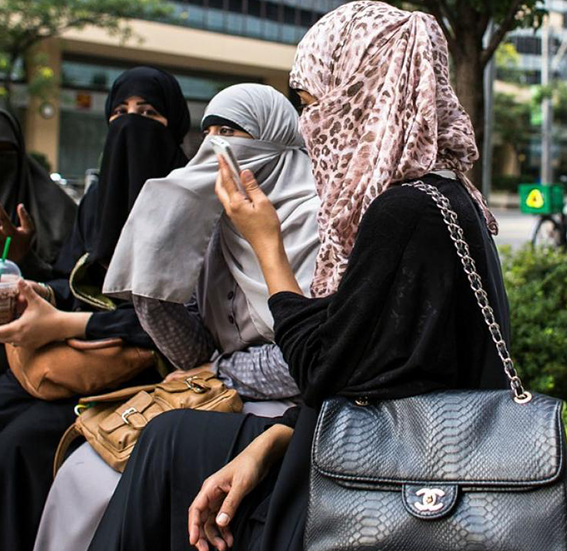
The question is why so many Muslims insist on a nikah ceremony without legalising this under English law to avail themselves legal protection. Marriage is a contract of civil law and this contract is the only legal element relevant in concluding a marriage. However, marriage is also an act of ibada (worship), thus marriage is one of the few contracts in fiqh (jurisprudence) that comes within ibada. In the UK, a unique situation exists among South Asian Muslims (but field study demonstrates this practice is widespread among other Muslim communities), they resort to having two separate ceremonies instead of one civil registration and, in most cases, only the religious ceremony takes precedence.

Justice For Women

Domestic Abuse

It is important that help is sought at the first instance from police if you are a victim of abuse and/or contact the local emergency medical services at a local hospital.

Marital Rape

Marital rape is a form of domestic violence and sexual abuse. This is a very serious issue faced by many Muslim women and the Islamic position on this varies depending on each School of thought. There are specialist organisations to assist such women.

Position under Islamic Law

In the Qur’an, it is clearly stated in Q.30:21 ‘He created for you from yourselves mates that you may find tranquility in them; and He [God] placed between you [spouse] affection and mercy.’ This verse is plainly making it clear that marital violence or rape is forbidden in Islam. There is a particular, verse in the Qur’an Q.4:34 which has been explored by ‘Justice for Sisters in Islam’ and will invite discussion on this as a workshop.

Position under English Law

Historically, sexual abuse or rape within marriage was regarded as rights of spouses (conjugal rights – in English common law) including British societies. The principle of marital exemption to the law (promulgated in 1736 in Matthew Hale’s ‘History of the Pleas of the Crown’ of rape but it was in 1991 when it was overturned by the House of Lords in the case of R v R [1992] 1 AC 599.

Give justice where it's needed most

Causes that can't wait

Justice For Sisters In Islam

Justice For Sisters In Islam

Justice For Sisters In Islam

Originality of Justice for Sisters in Islam

We identified what is lacking, the dissemination of egalitarian Islam. Most women said: ‘where do we find this?’ While the recent academic scholarship is beginning to address this, but it would be helpful to point to the Qur’an and Sunna reference on this.

Upcoming Events

Justice For Sisters In Islam

09AM

AUG 16

Justice For Sisters In Islam

08AM

AUG 21

Justice For Sisters In Islam

06PM

AUG 28

TOP
wpChatIcon
wpChatIcon